


TLDR
A sand control specialist is the completions engineer responsible for designing, selecting, and overseeing the installation of downhole systems that prevent formation sand from entering the wellbore and damaging production equipment. The role combines reservoir geomechanics, completion design, and field execution — and sits at the higher end of the completions engineering salary range.
This guide covers what the role involves, why sand control matters, the main techniques specialists work with, 2026 salary data, and how to build the specialism from a completions or production engineering background.
Most job listings for “sand control” describe field operators and pumping technicians — people who run the equipment on the rig floor. The sand control specialist is a different position: the engineer who designs the solution, selects the completion hardware, interprets the geomechanical data, and takes responsibility for the well’s ability to produce without sanding up.
The distinction matters for career planning, and it matters for salary. A sand control field operator earns very differently to a sand control specialist engineer, and most of the publicly visible salary data ($38k–$85k) reflects the field operator level. The specialist or engineer role sits significantly higher.
What is sand control in oil and gas?
Sand control is the practice of preventing formation solids — primarily fine sand and silt particles from weakly consolidated reservoir rock — from migrating into the wellbore during production. When sand enters the wellbore, it erodes tubing, choke valves, and surface equipment; blocks production flow; and can cause catastrophic failure of downhole pumps.
The problem is most common in young, unconsolidated sandstone formations — particularly in West Africa, Gulf of Mexico deepwater, Southeast Asia, and the Caspian region. Sand production typically worsens at high drawdown and at elevated water cut as the formation loses mechanical support.
Sand control is therefore a primary completions decision in these environments, not an afterthought. The choice of sand control method is made at the well design stage and is closely tied to reservoir characteristics (grain size distribution, formation strength), production targets, and well trajectory.
What does a sand control specialist do?
The sand control specialist’s job starts before the well is drilled and continues into the producing life of the well. Core responsibilities include:
- Geomechanical assessment — interpreting core analysis, sieve data, unconfined compressive strength (UCS) tests, and downhole logs to characterise formation sand risk and size distribution.
- Sand control method selection — evaluating standalone screens, gravel packs, frac-packs, expandable screens, and chemical consolidation against the formation characteristics, production rates, and well architecture.
- Completion design — selecting screen slot or aperture size against formation particle size distribution (API RP 19D methodology); specifying gravel pack design (gravel sizing, packing volume, placement technique).
- Pre-job simulation and planning — running hydraulic fracturing and gravel placement simulations for frac-pack jobs; planning fluid volumes, pumping rates, and contingencies.
- Wellsite operations support — overseeing the execution of the sand control completion from shore or offshore; reviewing real-time data from the treatment; confirming placement success.
- Post-job evaluation — interpreting pressure falloff data, production tests, and sand production monitoring after the well is on stream; recommending remediation if sand is still produced.
The role overlaps with stimulation engineering (particularly for frac-pack work), completions engineering broadly, and production engineering in the surveillance phase. A sand control specialist at a large operator may also have responsibility for vendor qualification and service company performance tracking across the asset.
Exploration Geologist, Romgaz — Romania
Advanced Deepwater Drilling and Completions Training
Read more client testimonials →The main sand control methods
A sand control specialist needs to know when to apply each technique and why. The main options in current use:
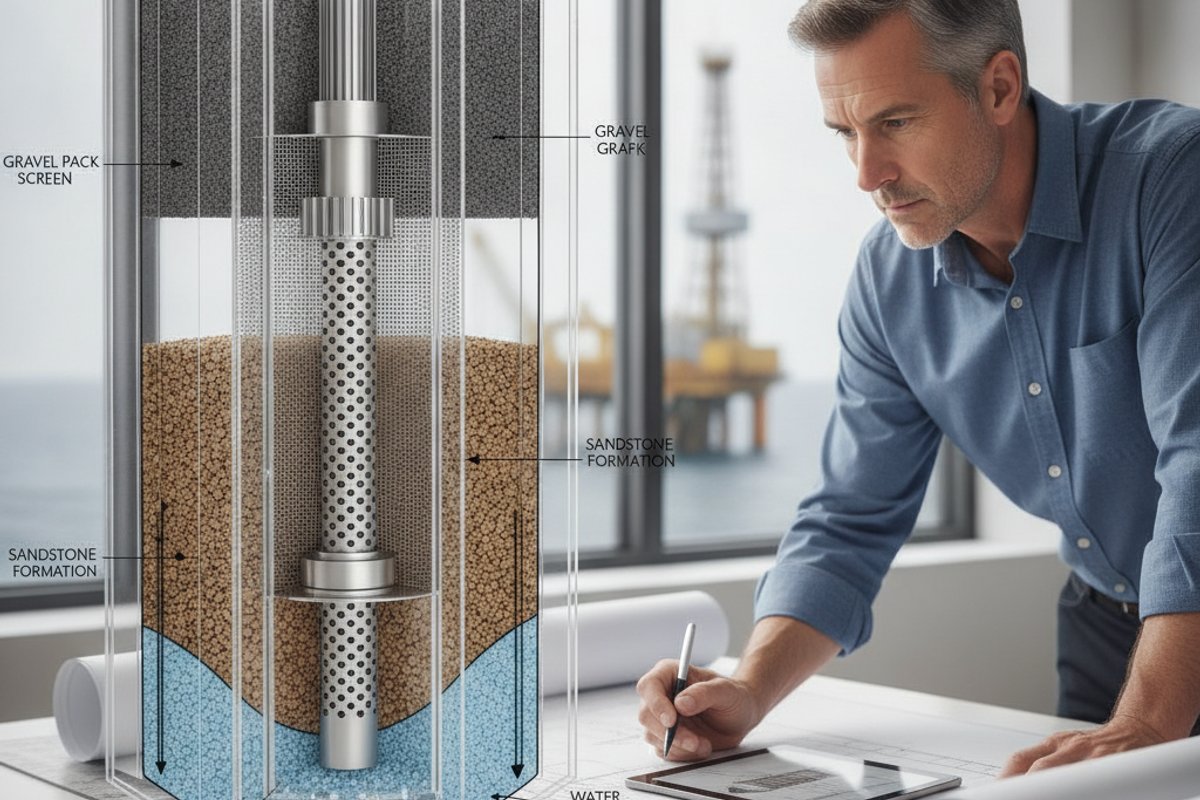
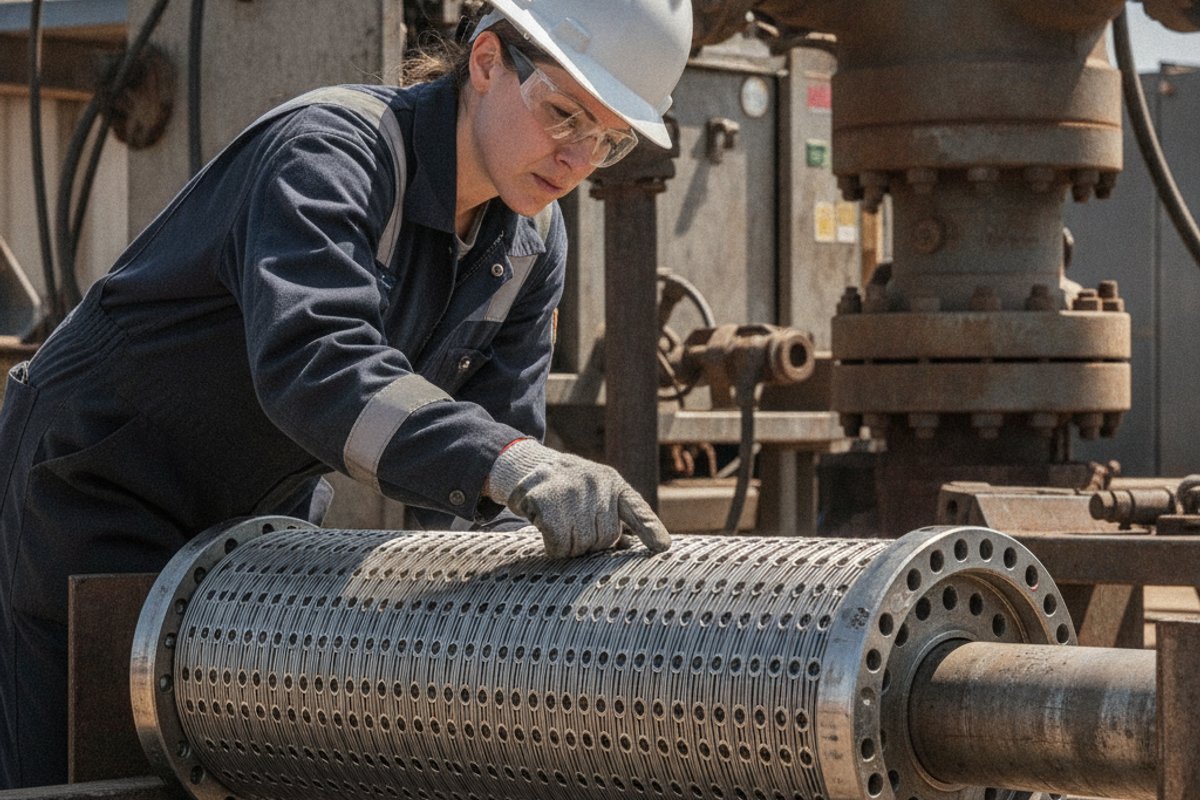
- Standalone sand screens (SSS) — wire-wrapped, premium mesh, or expandable screens run across the reservoir interval without a gravel pack. Simple and cost-effective for moderate sanding risk and lower drawdown environments. Flow convergence at the screen causes some productivity loss.
- Open-hole gravel packing (OHGP) — gravel is placed between the screen and the open-hole formation to create a permeable pack that bridges sand migration. Industry standard for deepwater horizontal wells. Requires careful fluid design to achieve full packing.
- Cased-hole gravel packing (CHGP) — the wellbore is cased and perforated, then gravel packed behind the screen through the perforations. More controllable than open-hole; common in vertical wells and high-permeability onshore formations.
- Frac-pack — a combined hydraulic fracturing and gravel packing operation. A short wide fracture is created, then gravel is deposited in the fracture and the annular pack simultaneously. Provides a bypass around near-wellbore damage and the highest productivity of any sand control method. Standard in Gulf of Mexico deepwater.
- Expandable sand screens (ESS) — screens that are expanded radially after placement to conform to the wellbore wall, eliminating the flow convergence penalty of standalone screens. Used where gravel packing is impractical.
- Chemical consolidation — resin injection into the formation to bond loose sand grains. Used selectively in specific zones or as a remediation technique after screen failure. Limited depth of treatment.
The specialist’s value is knowing which of these fits the well, the reservoir, and the budget — and being able to defend that recommendation with data.
Well Completion and Well Testing Training
A five-day course covering completion design concepts, selection criteria, and well testing — the foundation of completions knowledge that sand control specialists build on.
From $5,250 per attendee · London, Houston, Dubai, online · BAC and CPD Standards Office London accredited.
View Dates and BookKey skills and qualifications
A sand control specialist typically has a petroleum or mechanical engineering degree. The technical knowledge that differentiates a specialist from a generalist completions engineer includes:
- Geomechanics fundamentals — understanding formation compressive strength, effective stress, and how drawdown translates into sanding risk at different points in the well’s life.
- Particle size distribution analysis — interpreting sieve analysis and laser diffraction data to size screens and gravel correctly (API RP 19D and API RP 58 methodology).
- Fracture mechanics for frac-pack design — sufficient understanding to select frac-pack treatment parameters and interpret real-time execution data.
- Completion fluid chemistry — the fluids used during gravel pack installation (brines, viscosified carrier fluids) affect formation damage and pack quality; fluid selection is part of the design.
- Well performance modelling — PROSPER, WellFlo, or equivalent, to predict post-completion productivity and assess the production impact of different sand control options.
The Production and Completions Engineering hub covers the full discipline context, from basic completion design and well testing through to the advanced sand control management course.
Most specialists enter the role from a completions engineering position after gaining direct wellsite experience on gravel pack and frac-pack jobs. Drilling engineers who move into completions during the shift from new-well drilling to workover and remediation operations also take this path.
Sand control specialist salary in 2026
The salary data commonly cited for sand control ($38k–$85k) reflects the field operator and pumping technician level — the rig hands running the equipment, not the specialist designing the completion. A sand control specialist or engineer sits in the completions engineering salary band, which in the US Gulf Coast market ranges from approximately $110,000 to $165,000 depending on seniority, operator type, and whether the role is offshore rotation or onshore.
Service company positions (SLB, Halliburton, Baker Hughes sand control teams) typically offer base salary with significant field premium for offshore rotations. Operator-side specialist roles tend to pay higher base with more predictable schedule.
The scarcity premium is real: engineers who combine geomechanics knowledge, frac-pack design capability, and deepwater gravel pack operations experience are a limited pool. That combination commands the top of the range.

Advanced Sand Control Management and Technology Training
Covers sand production mechanisms, screen selection, gravel packing, frac-pack design, and sand management strategies for oil and gas completions. For engineers building or deepening a sand control specialism.
From $5,250 per attendee · London, Houston, Dubai, online · BAC and CPD Standards Office London accredited.
View Dates and BookSand control is a specialism that rewards deep expertise. The difference between a gravel pack that achieves full annular packing and one that leaves a void, or a frac-pack design that achieves the intended fracture geometry versus one that screens out, has a direct production impact that lasts for the well’s full producing life. Engineers who get those decisions consistently right are valued accordingly.
Related Courses
Book the Advanced Sand Control Management and Technology Training
Mobility’s Advanced Sand Control Management and Technology Training covers sand production mechanisms, screen selection, gravel pack and frac-pack design, and sand management strategy — the full scope of the sand control specialist’s technical toolkit. Available in London, Houston, Dubai, or online.
From $5,250 per attendee. BAC and CPD Standards Office London accredited.
Volume and group discounts available — ask us for a quote.
Frequently Asked Questions
What is sand control in oil and gas?
Sand control refers to the completion techniques and management strategies used to prevent loose formation sand from entering the wellbore during production. Sand production erodes equipment, reduces productivity, and can cause well failures. Sand control methods range from passive (standalone screens) to active (gravel packs and frac-packs) depending on the severity of the sanding risk and the production targets of the well.
What is the difference between a sand control operator and a sand control specialist?
A sand control operator (or pumping technician) is a field role: rigging up equipment, running the pump, monitoring the treatment in real time under the direction of an engineer. A sand control specialist is the engineer who designs the solution — selecting the screen type, sizing the gravel pack, designing the frac-pack treatment, and making the technical decisions that determine whether the completion works. Salary and qualifications differ significantly between these two roles.
What causes sand production in oil wells?
Sand production occurs when the reservoir rock is weakly consolidated — where individual grains are not cemented tightly — and the drawdown pressure across the formation is sufficient to dislodge them. The risk increases with production rate, declining reservoir pressure, and increasing water cut. Young geological formations in West Africa, Gulf of Mexico, and Southeast Asia are particularly prone to sand production. Sand control is required in any well where formation analysis indicates the compressive strength of the rock is insufficient to withstand the planned drawdown.
What is the difference between gravel packing and a frac-pack?
Both methods place gravel between the sand screen and the formation to prevent sand migration. Gravel packing — open-hole or cased-hole — fills the annular space between the screen and the formation wall. A frac-pack additionally hydraulically fractures the formation before placing the gravel, creating a short wide fracture that is then filled with gravel. The frac-pack bypasses near-wellbore formation damage and provides higher well productivity, but requires a more complex operation. Frac-packing is the standard sand control method in high-productivity Gulf of Mexico deepwater completions.
How do you become a sand control specialist?
The most common path is from completions engineering, gaining wellsite experience on gravel pack and frac-pack operations before moving into a specialist technical role. Drilling engineers who transition into completions during mature-field workover programmes also make this move. Formal training in well completion design and advanced sand control management provides the technical framework, and most specialists develop their gravel pack and frac-pack experience through service company or operator assignments on high-sanding-risk assets.